For centuries, progress rewarded those who knew the most. Rare individuals with exceptional insight could shape industries, guide nations, and redefine what was possible. Figures like Albert Einstein and Marie Curie held influence because they alone could interpret complex realities. Knowledge was scarce, and possessing it meant power.
That advantage eventually shifted. Progress no longer belonged to lone geniuses, but to those who could connect knowledge across people, synthesize it, and act decisively. The rapid development of COVID-19 vaccines illustrates this change. No single lab solved the problem. Breakthroughs emerged from researchers sharing data globally, collaborating across institutions, and aligning decisions under intense pressure. Intentional collaboration and collective intelligence, not individual brilliance, drove results.
But an even deeper shift has now occurred. We have moved beyond the age of collective intelligence into a post-intelligence world, one in which knowledge is no longer scarce at all. Artificial intelligence has accelerated this transition dramatically. Machines can analyze massive datasets, simulate outcomes, translate languages, and generate narratives at unprecedented speed. Intelligence is now abundant, nearly infinite.
As a result, the constraint has changed again. The challenge is no longer gaining access to information, but deciding what deserves attention, trust, and action. The limiting factor is no longer information, it is human judgment.
This creates a paradox. In a world overflowing with answers, deciding which ones matter is increasingly difficult. Expertise alone no longer guarantees influence. Judgment determines which insights lead to meaningful action.
The risks become clearest when human oversight is reduced. For example, on January 6, 2026, Utah regulators approved a first-of-its-kind pilot allowing an AI system to renew certain prescription medications for patients with chronic conditions, without requiring them to speak with a doctor. While supporters cite efficiency and improved access, critics warn that delegating clinical decisions to machines introduces serious risks. As Michelle McOmber, CEO of the Utah Medical Association told The Washington Post, AI can support care, but should not make care decisions.
As intelligence becomes a shared commodity, human responsibility grows in value. The leaders and organizations that succeed will not be those generating more insight, but those building trust, accountability, and collaboration. In the AI era, the rarest resource is no longer knowledge itself, it is disciplined human judgment, applied deliberately when answers alone are not enough.
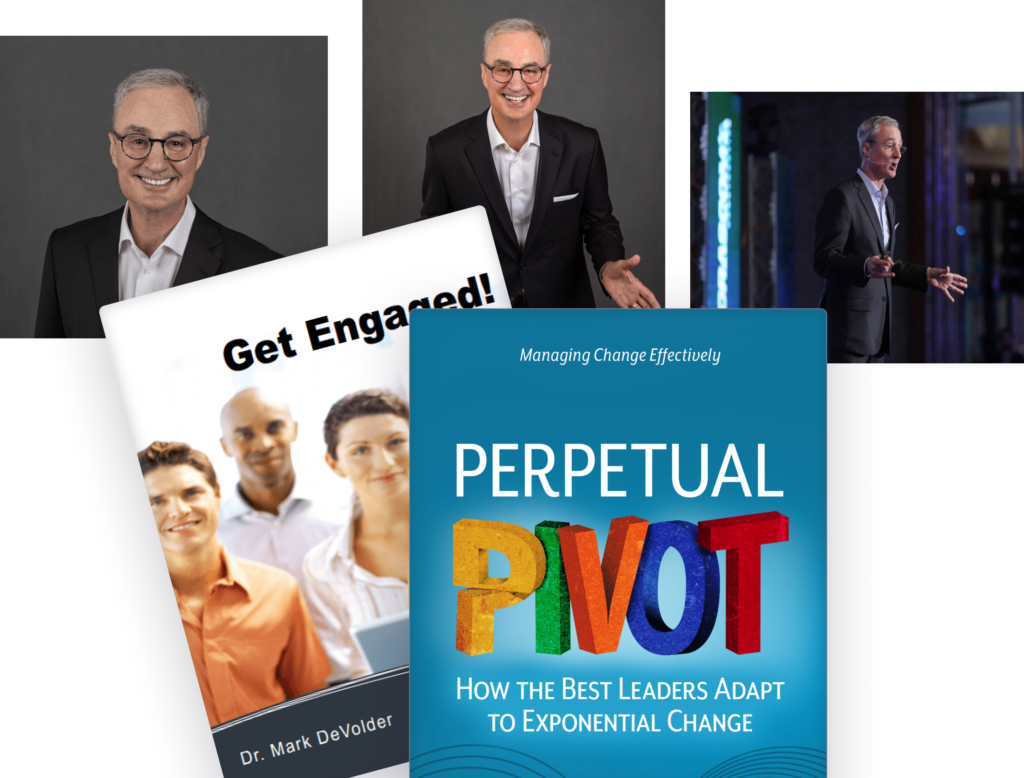
Dr. Mark DeVolder is a Top Change Management & Transformation Expert, Award Winning Motivational Keynote Speaker Empowering Confidence through Change. Mark can teach you how to change, anticipate business trends and accelerate future-proof transformation. He’s done it before with industry leaders like Qatar Petroleum, PepsiCo, Royal Bank of Canada and Pfizer.